
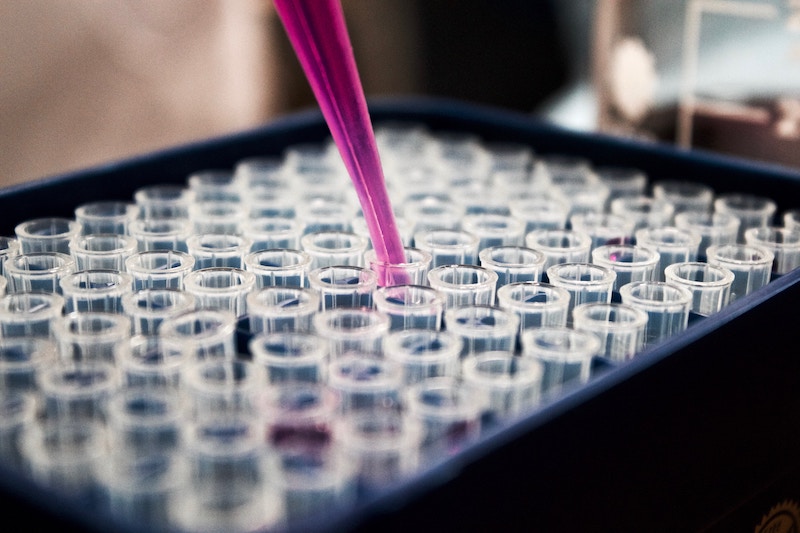
Image by Louis Reed on Unsplash.
This book provides a lot of enlightenment about the culture of medicine and Silicon Valley startups. As others have said, it reads like a thriller. It’s hard to put down. It’s usually easy to keep the characters straight, although there are so many people involved.
First, I found myself wondering why these people stayed in such an oppressive environment.
When I talked to someone who works in science, he said it’s hard to get jobs…and frankly, most science environments are tough unless you’re a lead investigator with a good grant at a top research university.
Elizabeth attracted employees from established companies like Apple – people who lost stock options and advancement opportunities. It would be helpful to see where they are now. Two of the whistleblowers –
Second, there’s a lot of determination to believe what you want to believe.
For instance, a Walgreens consultant (whose firm was being paid $25K per month to keep Walgreens out of trouble) warned of many red flags. He was ignored. Theranos’s investors often didn’t even bother with due diligence; they were afraid of missing out on the next big Apple.
Finally, Theranos seems like small fry compared to the deception and greed that’s going on all over the health care industry.
After United Health Care denied a claim for their son’s ulcerative colitis, the family took an unusual step. They sued. Evidence gathered for the case showed that (as ProPublica reported: “United employees misrepresented critical findings and ignored warnings from doctors about the risks of altering McNaughton’s drug plan.”
A doctor admitted he had based his “opinion” on notes he’d gotten from a nurse, which he’d “cut and pasted” and presented as his own. Hmm…sounds like some of the Therano anatics, doesn’t it?
The same Pro Publica article found that a major insurance company had automated claims reviews, so they spent less than 2 seconds reviewing each claim. These companies, with millions of policyholders and hundreds of thousands of claims each year, have hurt far more patients than Theranos ever did.
A recent NY Times article reported that Alina Hospital in Minneapolis – a wealthy nonprofit – turned away anyone with unpaid bills, including children. Following the report the hospital indicated that its policy would be revised…but the vague wording of the laws makes it unlikely that any hospital will be prosecuted.
There are also scams associated with so-called preventive medicine. Medical services implicitly suggest that tests and screens actually “prevent” illness and death, when in fact they either reduce risk (often by a. very small amount) or enable early detection, which may or may not reduce mortality.
NPR investigated the role of the Merck drug company in establishing what is now taken for granted: routine screening for bone density, particularly among women over fifty.
Then there are companies like Envision, whose business model was based on placing out-of-network physicians in specialties were patients desperately needed care, such as ER. They would then privately bill patients at exorbitant rates, beyond what insurance would cover. They were seriously affected by the “No Surprises.”
The real story is, why aren’t these stories more public? With Theranos we had a single charismatic person, who many people could identify with, as the story’s center. We also had reporting by the WSJ, not NPR or ProPublica. And we have very few laws and regulations to hold medical services accountable.
It’s not surprising that Holmes was indicted for wire fraud – defrauding investors – with no penalty for patient harm. Our laws and systems are incentivized to protect property, especially property of the wealthy. rather than health. The dream of “preventive medicine” has been adopted with the belief strength of a religion. I recommend reading Gilbert Welch’s books, Less Medicine More Health, and Overdiagnosed. He’s got good videos on YouTube too.
After reading this book along with countless news reports on healthcare delivery, I concluded that Elizabeth Holmes’s second biggest mistake was not hiring lobbyists.
They protect all sorts of institutions and companies that do far worse things, e.g., abuse patients in eldercare settings.
He biggest mistake, of course, was dropping out of college. Three more years of coursework would have equipped her to run a legitimate, law-abiding company. And she could have benefited from the mental health services at Stanford. Her lack of self-awareness and poor choices of romantic partners were what ultimately brought her down.
It’s been pointed out that she was in her thirties when the company dissolved in 2018. She’d grown older but no wiser; she was in a. bubble environment, influenced mostly by the ruthless Sunny Balwani, with few opportunities to stretch her mental muscles and learn from others.
It’s a tragic story that harmed a lot of people who, in hindsight, should have known better. Two prominent whistleblowers were young enough to start over. Erika Cheung moved to Hong Kong and apparently has a life there, working in the area of entrepreneurial ethics; Tyler Shultz apparently started his own company in 2017. He’s not on LinkedIn and his company Flux Biosciences doesn’t have a website. He acts as an advisor to Erika’s company.

