
My blood pressure goes through the roof when I’m in a medical setting. It’s a perfect storm created by noisy waiting rooms, rude receptionists, recommendations that aren’t supported by science, and the ambience of TSA security encounter.
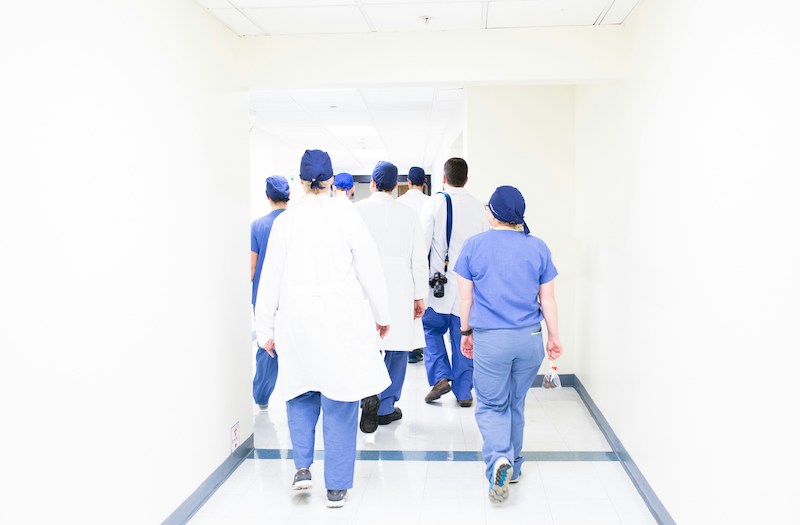
So I’ve been reading up on white coat apprehension, which is now recognized as real. However, the name and symptoms don’t tell the full story. The idea is that people get scared of doctors because they’re authority figures in white coats. So doctors sometimes try to help by leaving you alone with the tech, who’s usually wearing scrubs, not white coats. They’re usually female, so I’ll refer to them as “she.” And they’re usually ten times harder to deal with than the doctors.
It’s important to realize that a good part of most medical visits is spent with a Medical Assistant or “tech.” (Most of the time the MA’s are called techs.) Many of these MAs are rude and bossy. They remind me of TSA agents and they’re rarely trained to respect patient rights.
I always decline blood pressure checks because my numbers will be outrageous after encountering crowded, noisy waiting room and the MA. They sometimes make it worse (“You HAVE to do this”) and they seem to be poorly trained for their tasks.
I’m not the only one;
A comment on a New York Times article goes
“VItal signs are taken by an assistant who is unpleasant. Never a positive word. She’s focused on getting through the day’s patient list. Upon completion, she states the doctor will be here shortly and disappears before a question can be asked.”
Medical Assistants get minimal training. They’re poorly paid. And most of them remind me of TSA agents. They’re doctor wannabes. Like TSA agents, they love telling people what to do. Unlike TSA agents, they spend more than a few minutes with each patient.
I haven’t seen any discussion of patient responses to Medical Assistants. When you google MAs you get lots of articles extolling the wonders of an MA career, especially the minimal requirements and training. Doctors are encouraged to use MAs in their practices. The list of “tasks” that are delegated to MAs seems to be growing. Apparently some take medical histories and even offer mental health screening.
One article, for example, shows that MAs are used more in contemporary practice. “Medical assistants (MAs) are being used as key care team members even as traditional educational programs may not equip them for this new way of working,” says the article.
The article reported a 12-week training. The clinicians and MAs described the value of the training. Patients were not asked.
The bottom line is, if vital signs are important, why have poorly trained techs taking them? Are we concerned with accurate results…or just putting numbers in a chart? Why am I even asking?
And let’s realize that “health care” means spending most of your time with a poorly trained assistant…and then hearing docs complain about calling “Dr Google.” Who else?

