
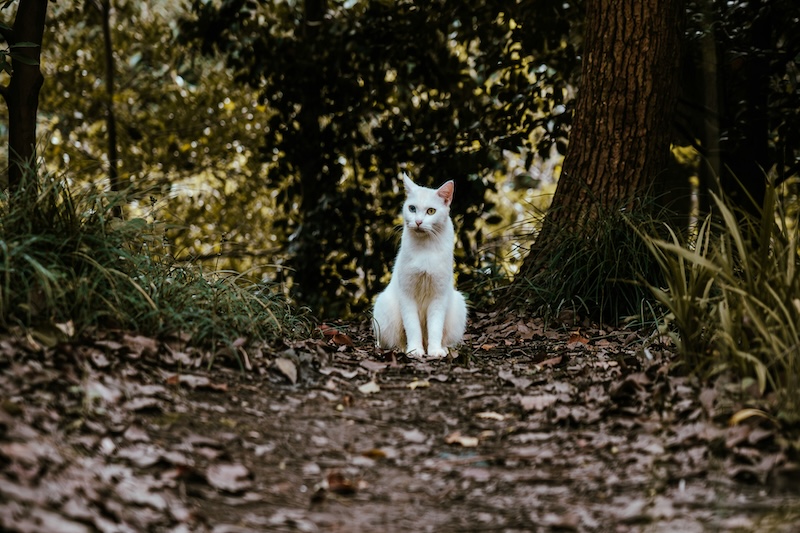
Image from Alvan Nee on Unsplash.
“Why the loneliness panic misses people like me.”
I wish I had a dollar for every article and social media post warning older single people about loneliness. They always feature the same fears: illness, holidays, mice to dispose of, broken appliances to be fixed, and friends who mysteriously disappear.
But what if some of us are not afraid of being alone at all? What if we have been single for a long time, often without helpful family members? What if we actually like the situation, accept the tradeoffs, and have made our peace with the downside?
We do not expect people to be there to help us. We have learned to handle things on our own.
So I roll my eyes when I read posts like this:
“I like living alone until I get sick, or I see a mouse, or there’s a major home repair.” “I moved here to be with the grandchildren. Now they’re at a stage where being with grandma is less important than other things, and this location works for married people with families, not singles.” “I spend Christmas, Thanksgiving, and Easter by myself.” “My friends aren’t there for me when I need them.”
Worst of all: “I wish I had someone to lean on.”
Many people who feel this way are widowed or divorced. Or they carry a mental image of what friendship is supposed to look like, reinforced by endless articles about the importance of social connection. You have probably heard the one about loneliness being as bad as smoking.
But then there are those of us who are single at heart, as Bella DePaulo calls us in her book. We have always wanted to be single, or at least we do now. In a recent interview, she pointed out that one downside of marriage is the possibility of divorce. People suddenly become single and have to learn new roles. They have to learn to do things their partners always did for them.
Single people do everything. They do it themselves, they hire help, or they exchange favors. But they get it done. These days you can hire almost anything if you live in a big enough city.
I once read that some people knew they were gay by the time they were six. That is about the age some of us knew we were going to be single.
When I was a little girl, I did not play with dolls, pretending to be a mom. I played at being a cat owner. I did not fantasize about a house with a picket fence. I wanted to live alone, with cats, in a luxury penthouse apartment. I have lived in houses and I have owned dogs. But now I do live in a top floor apartment that is somewhat like a penthouse. It is not luxurious, but it is blissfully quiet. I have a cat who has to be the only one. Like me, she will not share.
People who are truly single at heart learn to embrace the lifestyle. We do not expect people to be there to help us. We do not feel deprived because we do not have family members or friends who miraculously appear during a crisis, full of goodwill and competence and eager to help.
But we also learn to be strong. There is nobody saying, “You’re too old to take that trip alone,” or “Don’t you need to rest more?” Or worst of all, “Listen to the doctors, they know what’s best.”
We have learned to handle things on our own. Even when it is challenging, we know there is always a way. We negotiate everything from food delivery when nobody is home to medical facilities that do not know how to handle people who check the box marked Single. We are dimly aware of all those articles about lonely people, but we do not recognize ourselves in them.
We do not want strangers to feel sorry for us eating by ourselves at a table for one. We want to be left alone to enjoy our meal and to be treated respectfully by the waitstaff.
If we see a mouse, we do not wish for a spouse to deal with it. We wait for the cat to do its thing or we call for help. We learn how to deal with service people, who can be especially intimidating to single women. We go to movies, the theater, and restaurants when we want to. We develop our own strategies. For example, I like being a volunteer usher in a theater, where all the other ushers are by themselves.
Christmas is coming. For many of us, spending the day alone is a privilege, not a sign that something is wrong. Our biggest challenge is deflecting invitations from people who feel sorry for us.
Have you noticed those AI videos showing lonely people waiting by the phone on holidays? Some are unintentionally funny. There is the lonely woman spending the day at a laundromat, watching her clothes dry. Or the man standing outside in the cold, waiting for a family member who never said they were coming.
In a way, I was lucky. In my twenties I traveled around the country alone for work. I got used to doing whatever I wanted, by myself, in my free time. People thought I was crazy.
Hotels back then had little experience dealing with female guests traveling alone. Once, in a very nice hotel, I went to the bar to sip a drink and listen to music. A staff member wandered over and casually asked who I was. I was dressed for business, as we did in those days. He clearly assumed I must be a prostitute because I was alone. After I explained that I was a guest, he went away.
It was funny. And I never ended up in a Me Too situation, thanks to a combination of luck and a glare that said, “Go away.”
I do feel uncomfortable if I am the only single person. I once went to an academic social event where the guests distributed themselves into two groups. One group sat around the kitchen table talking about how long they had been married. It was like a contest. Forty years? Twenty? In the living room, the young children were free to play games with each other. I decided to leave early.
Being single was harder in the days when work life involved social gatherings and recruiters advised companies to be suspicious of single people. When I was an academic, I put “single, two cats” on my resume because I knew people wanted to know but did not know how to ask. If I had had a husband, they would have had to wonder what he would do as the trailing spouse.
Ultimately, getting older is not much of a transition when you are single. When you have kids, there is a transition when they go to college. There are transitions for weddings and divorces. Most of those transitions involve going from social to solitude.
When you are single, your milestones go unmarked. People assume you do not need a housewarming because single people are apparently much too uncommitted to buy homes. There is no singles equivalent of a bridal shower. There is no big shift from being with people to being alone.
You have already learned to enjoy solitary holidays. If you choose to retire, you will simply get more of them.
You welcome the opportunity to spend more time in your own company. You are not buying yourself a present so you will have something to open on Christmas. You have found meaningful ways to make the holiday your own. You are not sitting by the phone waiting for the grandchildren to remember you. You are too busy with activities that define your life.
Married people face far more complexities as they get older. Who dies first? What will the surviving spouse do on their own? Will the children try to coddle you? Will they fight over the estate or expect you to be a perpetual unpaid babysitter?
Most importantly, being single means the biggest problem of getting older, being lonely, does not happen. We frame our aloneness as solitude. All those stories about loneliness, including the famous comparison to cigarettes, seem to be written for somebody else. If you actually enjoy being on your own, the shift to getting older will be a much gentler, easier experience. The biggest problem is explaining this to everybody else.

